2026-05-15

Deciphering the Cardioprotective Efficacy of SGLT2 Inhibition via Mechanotransduction


The Biophysical Blueprint

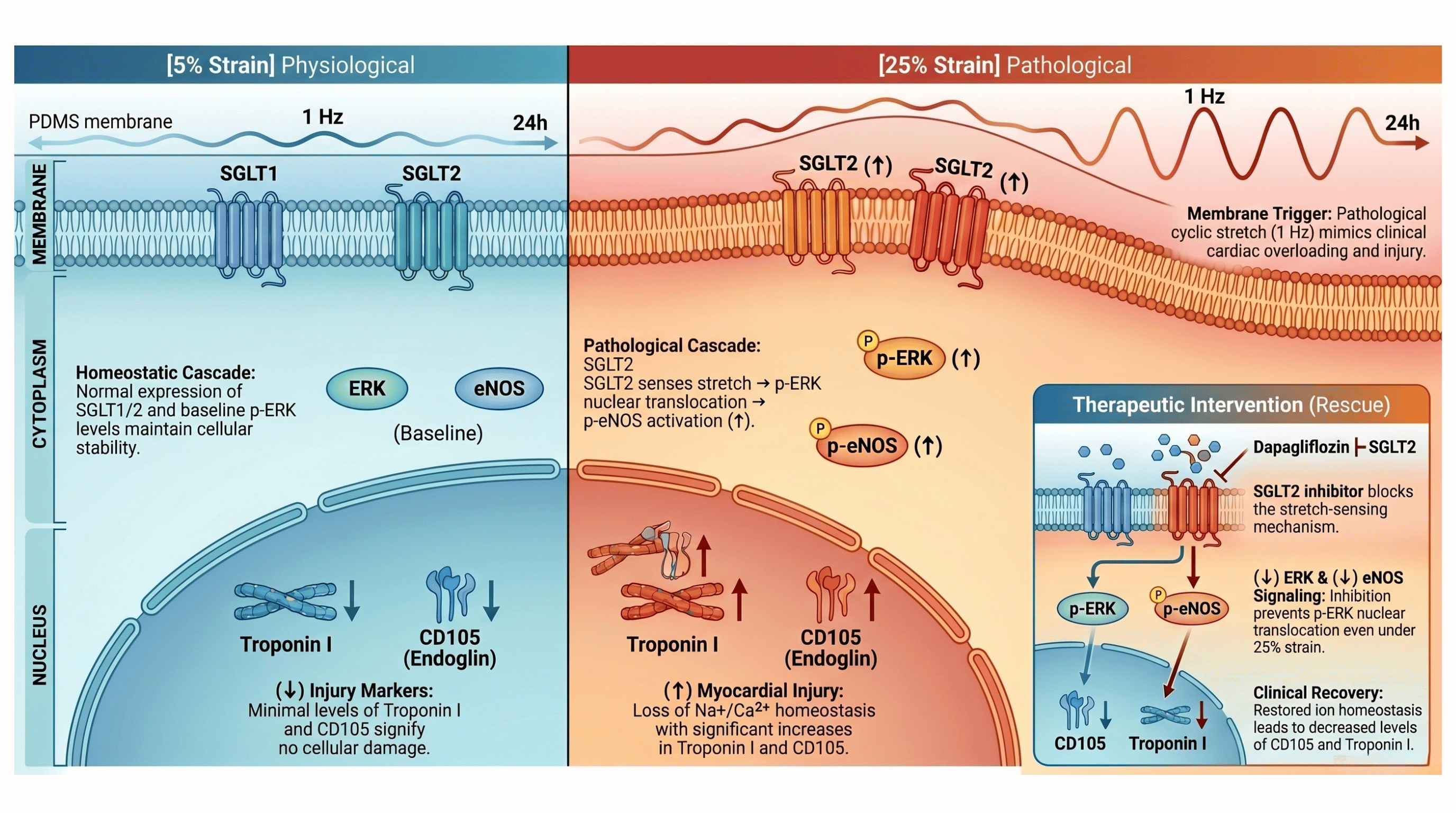
The experimental architecture implements a 1 Hz frequency (60 cycles per minute), precisely calibrating the system to the resting human heart rate. The study contrasts 5% strain (physiological pulse) against 25% strain, a magnitude that replicates the extreme pathological tension of ventricular pressure overload and hypertension.


Mechanistic Core: The SGLT1/2-ERK Signaling Cascade

 
  • Pathological Induction: Subjecting human cardiomyocytes to 25% strain triggers a massive upregulation of SGLT1 and SGLT2.
  • Nuclear Translocation: This mechanical overload shuttles p-ERK into the nucleus, igniting aberrant eNOS activation.
  • Cellular Injury: The resulting biochemical imbalance precipitates the massive release of damage markers, specifically Troponin I and CD105.
  • Pharmacological Abrogation: Intervention with the SGLT2 inhibitor Dapagliflozin precisely extinguishes the aberrant SGLT expression. This action blocks ERK activation and attenuates the secretion of injury markers, exhibiting direct cytoprotective efficacy at the single-cell level.
Transcending Static 2D Constraints: Breaking "Phenotypic Dormancy"
Ion channels within the cardiovascular system, such as SGLT2 and NHE1, remain largely dormant under healthy conditions, activating only under extreme mechanical overloading.
  • Rectifying the Blind Spot: In conventional static environments, the absence of physical tension leaves SGLT2 expression in a non-physiological, quiescent state.
  • Causal Validation: Integrating 25%–1 Hz dynamic stretch shatters this phenotypic silence, proving that pure physical strain is sufficient to drive SGLT2 overexpression and ionic imbalance, faithfully reconstructing the primary pathogenic logic of the human ventricle.
Superiority Over Animal Models: Absolute Variable Isolation
Traditional investigations into heart failure and SGLT2i efficacy rely heavily on animal models, which are saturated with "systemic noise"—including sympathetic storms, systemic inflammation, and endocrine interference.
  • Mechanic vs. Chemic: These in vivo systems fail to distinguish whether SGLT2 activation stems from chemical signaling or physical pressure.
  • Variable Extraction: By utilizing human AC16 cardiomyocytes within this dynamic platform, the study isolates "physical overload" as a discrete variable. It demonstrates that Dapagliflozin abrogates mechanically-induced p-ERK activation and CD105 release in a totally autonomous environment, independent of systemic hormones.
This "Dynamic Mechanical Organ Model" harnesses the purity of physical stress to emerge as the ultimate weapon for next-generation cardiovascular drug screening, validating "single-cell mechanical protection" with unprecedented fidelity.