2026-05-16

Reconfiguring the Shattered Niche: SGLT1/2 as a Mechanosensitive Gateway to Post-Traumatic Neurodegeneration


Traumatic brain injury (TBI) fundamentally originates from a mechanical insult, yet traditional neuroscience has long surrendered to rigid, physics-deprived culture vessels that sentence neurons to an artifactual silence. This methodological limitation severely restricts our ability to isolate physical force from systemic variables. By engineering a dynamic disease-modeling platform that applies a controlled, disruptive 25% biaxial cyclic stretch at 1 Hz to human neuroblastoma (SH-SY5Y) cells on collagen I-coated PDMS membranes, this approach abandons conventional culture limitations. Instead, it reconfigures the post-traumatic niche with high fidelity, unmasking a previously hidden mechanical-to-biological conversion that drives neurodegenerative pathology.

The Mechanosensitive Cascade: Translating Physical Tension into Biochemical Toxicity
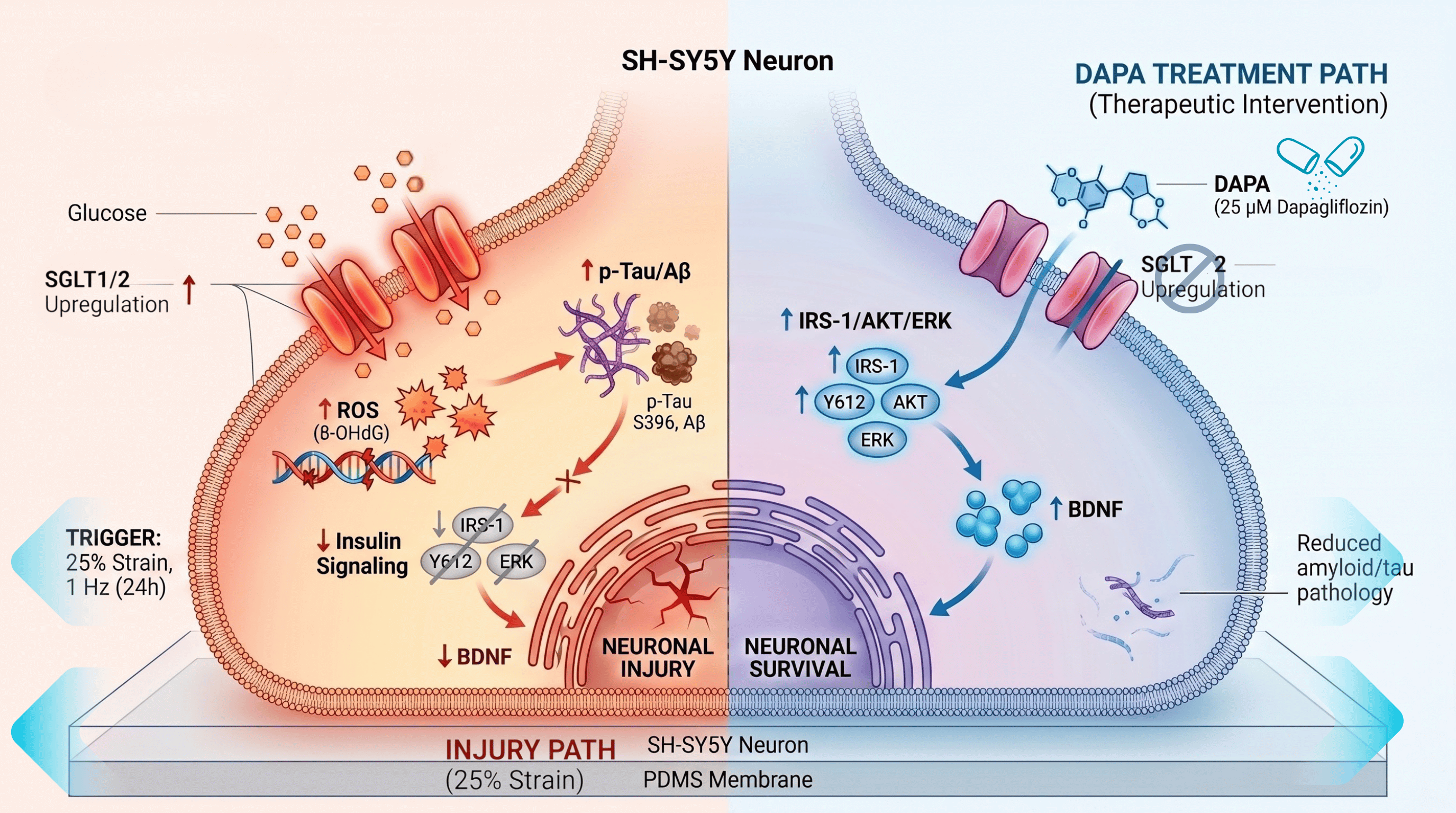
Subjecting human neuroblasts to this violent 24-hour physical deformation does not merely stretch the membrane; it dismantles neuronal homeostasis. The 25% strain instigates profound oxidative DNA damage, marked by a surge in 8-OHdG, while simultaneously forcing the aberrant upregulation of sodium-glucose cotransporters (SGLT1/2). This sudden metabolic shift acts as a molecular brake that abruptly dampens the neuroprotective insulin signaling axis—specifically halting the phosphorylation of AKT, ERK, and IRS-1. Deprived of these survival signals, the cellular machinery collapses, driving the pathological accumulation of amyloid-beta (Aβ) and the hyperphosphorylation of Tau proteins.

Pharmacological Rescue: Remodeling the Impaired Signaling Axis
The true resolution of this dynamic platform lies in its capacity for precise therapeutic interrogation. Introducing the SGLT2 inhibitor Dapagliflozin (25 µM) successfully intercepts this mechanotransduction cascade, effectively reversing the pathological accumulation of toxic proteins. By shielding the cell from SGLT-mediated metabolic sabotage, this intervention restores brain-derived neurotrophic factor (BDNF) expression and salvages neuronal survival.

Perspectives and Paradigm Shifts
This dynamic system provides the rigid mechanobiological evidence required to validate the repurposing of Dapagliflozin for neurological safeguarding. By stripping a chaotic cranial trauma down to its pure physical coordinates, this model proves that SGLT1/2 proteins function as atypical mechanosensors that translate physical impact into metabolic failure. This discovery marks a profound paradigm shift, establishing a human-relevant framework to confirm how blood-brain barrier-permeable SGLT2 inhibitors can actively rescue insulin signaling in the traumatized brain.